

Customers Stories: Why MCPs are not enough for an AI SRE
Two customer investigations show how a context graph was key to helping agents retrieve the right data by tracing changes and shared dependencies.

Roxane Fischer
Sep 25, 2026 · 5 min read
Deep dives into Site Reliability Engineering, AI in production, and scaling infrastructure gracefully. Written by the team building the future of SRE.
Two customer investigations show how a context graph was key to helping agents retrieve the right data by tracing changes and shared dependencies.

During a production investigation, an agent must connect applications, machines and alerts. Across five integrations and ten tasks, Anyshift graph queries used 83% fewer model tokens and took 47% less time on average than native MCPs.


We rebuilt our agent's architecture to separate operational knowledge, model runtime, and side effects. When we added OpenAI Codex support, the pull request only touched one file


Unified production context makes AI agents cheaper, faster, and easier to scale. In our live benchmark, resolving relationships before inference cut model-token usage by 83.5%, while reducing response time and estimated cost without changing the task outcome.

We tested six models on a bounded task: turn a plain-English infrastructure question into one supported query. Deterministic normalization and execution erased most output differences, leaving Haiku and Luna slightly ahead of Opus on final-answer accuracy. Luna then matched Haiku at 21% of the observed cost.


Annie (our AI SRE agent) had institutional memory from ACE, the agentic context-engineering loop that curates cheatsheets from past runs. It worked, but clients kept catching her trusting stale entries or missing answers buried in her own bloated context. So we added five things on top: (1) a fixed set of memory items always presented to the agent, (2) per-query retrieval over the rest of the memory store, (3) an agent-optimized index of that store, (4) the ability for the agent to query the store mid-run, and (5) tried-and-true memory freshness mechanisms. Production context, now optimized by the AI using it. Here's the reasoning and what a few weeks in production say.


An AI agent in the incident channel can run kubectl and read a dashboard. What it can't do is judge whether the last deploy is the suspect or a red herring. We open-sourced the SRE skills that encode that judgment, runnable offline against fixtures with no credentials.


Private equity firms are pushing AI across portfolios, but the hard part is no longer experimentation. It is turning sponsor-level AI pressure into governed, production-aware operating workflows that actually move EBITDA.

The 10 best AI SRE tools in 2026 compared by architecture, root cause analysis, remediation, and change awareness — from Anyshift's versioned graph to Resolve AI's autonomous agents.
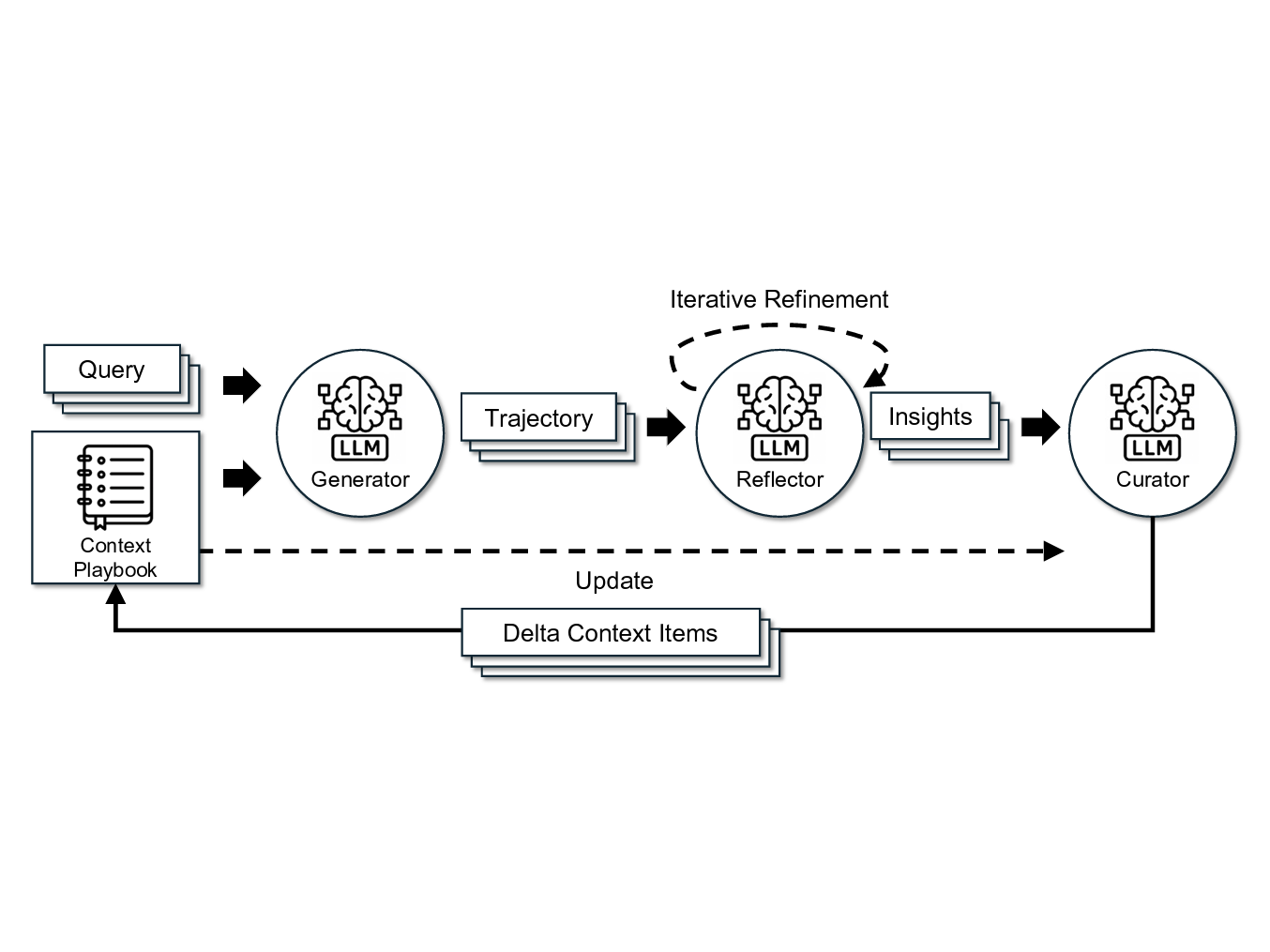
AI agents start every run from scratch. ACE (Agentic Context Engineering) gives them institutional memory that evolves through use, cutting root cause analysis time by 30%.

The limits of telemetry-only AI approaches to SRE and why topology is the missing piece.

GenAI is everywhere. But very often, the cool and exciting demos don't work the same way in production.
Get a monthly digest of our best engineering articles, SRE case studies, and Anyshift product updates. No spam, just signal.