Snyk Container (Snyk's container-image scanner) scans the final built image for installed packages and known vulnerabilities. The image can be checked without starting a container.
A scan can say checkout-api contains CVE-2026-4172 (a public vulnerability identifier). It also gives an image digest: an immutable identifier for one exact image, such as sha256:... (Docker docs). Security still needs the runtime facts: is that exact image live in production, exposed to the internet, tied to a rollout, owned by a team, and still open?
In this example, Snyk flags CVE-2026-4172 on checkout-api, image registry.demo.local/checkout-api@sha256:checkout-prod-9f31, in target demo-retail/checkout-api.
That image digest is the handoff. Anyshift looks it up in Kubernetes runtime, event history, cloud exposure, and ownership, then writes the verified fields back to the Snyk Project (the Snyk record for that scanned target) as attributes and tags.

The runtime data comes from Anyshift's event-based Kubernetes graph. It stores the live cluster topology and the changes behind it: pods, containers, services, ingresses, deployments, ReplicaSets, namespaces, owner references, and rollouts.
Snyk Finding
Anyshift does not rely on the service name alone. It matches the Snyk image digest to the image digest on running Kubernetes containers.

Runtime Evidence
Before Anyshift writes tags back to Snyk, it queries its Kubernetes graph for the runtime evidence behind each tag:

If no live pod has that digest, Anyshift leaves live_prod off. If the graph has no rollout event, it leaves arrival time and actor blank.
CLI Review
Snyk Update
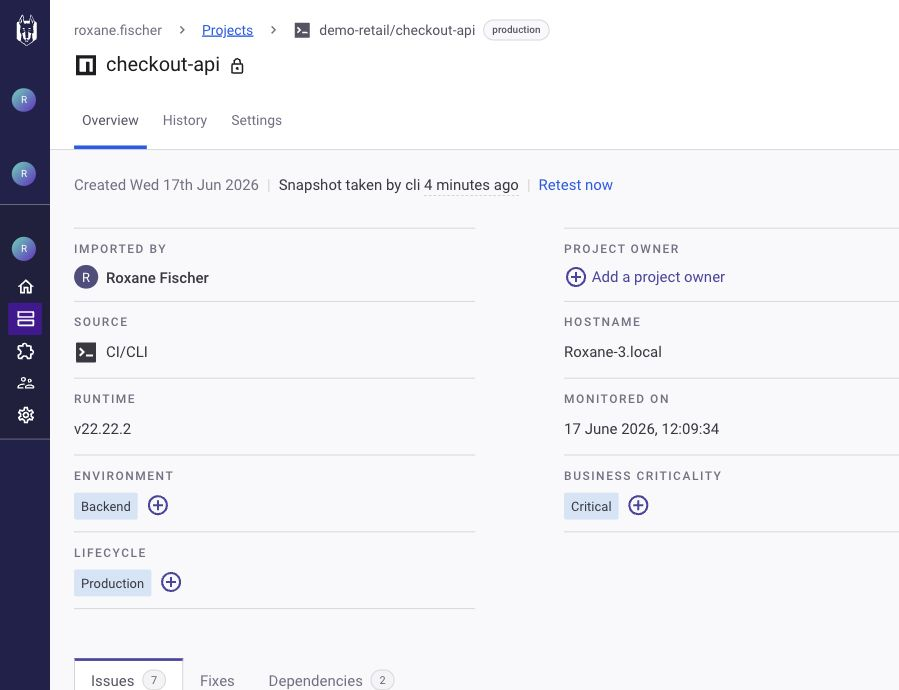
The Snyk project stays the triage surface. It shows the imported checkout-api target, the production reference, and the priority attributes. Anyshift writes the verified runtime fields back to that same project through the Snyk API: live production status, internet exposure, owner, rollout, actor, and open window.
The finding now carries both sides: vulnerable artifact and production path.
Security Outcome
When triaging container CVEs, security can route on facts instead of severity alone:
- live or build-only
- prod or non-prod
- exposed or internal
- tied to a rollout or not
- open or already rolled back
- which owner should fix it
A critical image finding becomes a runtime-backed remediation target.
If your team uses Snyk and wants runtime-backed vulnerability routing, contact us.