TL;DR: Confluent Schema Registry stores schemas for Kafka messages and checks compatibility as they evolve; Anyshift adds the production impact, so teams see affected services, owners, monitors, and skipped paths before approving the write.

The Schema Change Confluent Can Validate
The object being changed is a Confluent schema subject: checkout_events-value (the named place in Schema Registry where this event format evolves). It describes the value payload (the body of each message) on the checkout_events Kafka topic (the event stream that carries checkout events after payment authorization).
Here, v2 means the proposed second version of that schema. The change is simple: schema version 2 adds optional fraud fields to the event:
fraud_scorefraud_decisionrisk_signal_version
The new fraud fields are optional, so older checkout events can still be valid without them. That is why Schema Registry can mark schema version 2 Backward compatible: existing consumers can keep reading the stream even while producers start adding the new fields.
That answers the Confluent contract question: can this schema version be registered? The next question is operational: what happens in production when this version becomes current?
The Production Impact Behind the Schema
The schema subject is attached to the checkout_events stream, and that stream is part of a live checkout path. Before approving version 2, the workflow owner needs the production story around that stream:
checkout-api, owned bypayments-platform, produces the stream after payment authorization.fraud-worker, owned byrisk-platform, consumes the stream throughfraud-worker-prod.checkout-sandboxis visible but skipped because it is not part of production approval.- The relevant monitors are
checkout event publish errorsandfraud worker consumer lag.
This is why compatibility alone is not enough for approval. It can say the schema shape is safe, but it cannot tell the approver which producer will emit the new fields, which consumer will depend on them, which monitor should catch a bad rollout, or which sandbox path should stay out of the decision.
Review Production Impact Before Registering
Anyshift adds that missing review step before the Confluent write. The platform owner asks for the schema registration with production impact:
annie do --show-yaml "review and register Confluent checkout_events-value schema version 2 with production impact"Anyshift traces the stream's production context, renders it for approval, and only then lets the Confluent API perform the native write.
The review turns a schema registration into an operational decision:
review:
  subject: checkout_events-value
  topic: checkout_events
  schema_change: add optional fraud scoring fields
  compatibility: backward
  decision: register schema version 2 after production review

production_impact:
  - service: checkout-api
    owner: payments-platform
    role: producer
    monitor: checkout event publish errors
  - service: fraud-worker
    owner: risk-platform
    role: consumer
    consumer_group: fraud-worker-prod
    monitor: fraud worker consumer lag

skipped:
  - checkout-sandbox: sandbox-only consumer group

confluent_actions:
  - check Schema Registry compatibility
  - register checkout_events-value version 2
The Confluent write stays intentionally narrow: check compatibility, then register the schema version in the system that owns the stream contract.
The Native Confluent Proof
After approval, the Confluent data-contract screen shows that the change landed: checkout_events, Schema ID 100002, compatibility Backward, version 2 (current), and the associated topic.
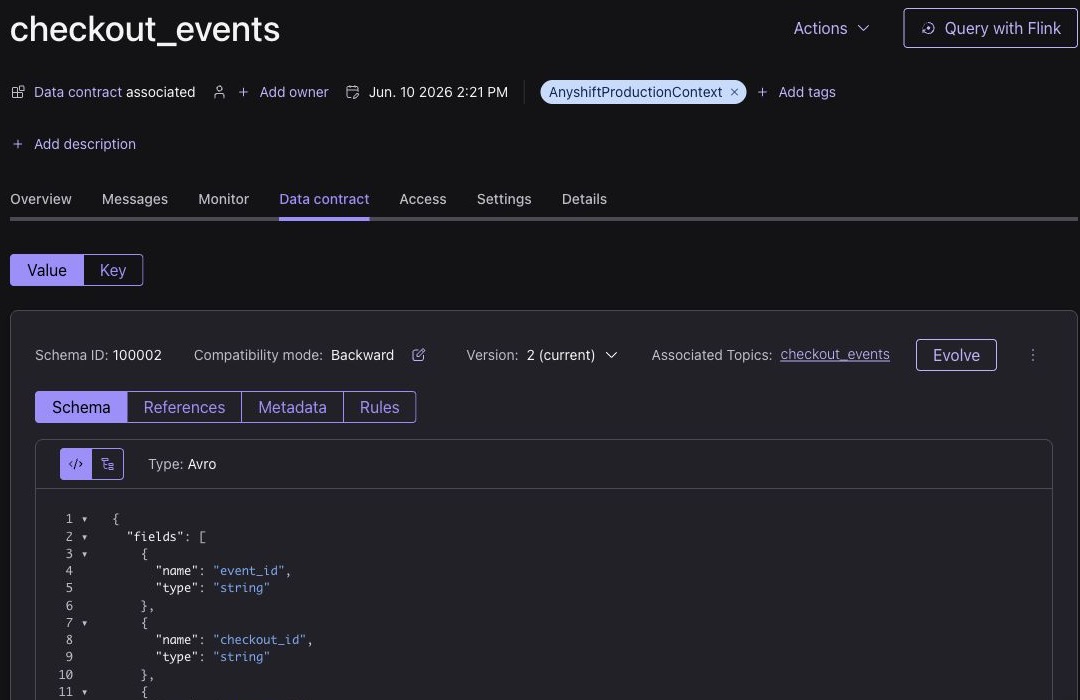
Read the two artifacts together: Anyshift shows what was reviewed before approval; Confluent shows the schema version that actually landed.
Why Compatibility Is Not Enough
A backward-compatible schema can still change production behavior. Version 2 may be safe for Schema Registry, but the release owner still needs answers before rollout:
- Is
checkout-apiready to emit the fraud fields? - Can
fraud-worker-prodconsume mixed old and new events during rollout? - Which monitor catches publish errors or consumer lag?
- Which non-production consumers should stay out of the approval?
That is the joint surface: Confluent answers whether the schema can be registered; Anyshift answers whether the production stream is ready for that registration to matter.
Where This Pattern Extends Next
The same pattern extends to connector updates with downstream service impact, high-risk topic cleanup with owner evidence, and schema deprecation reviews that identify consumers before a breaking migration.
For Confluent users, the win is straightforward: Schema Registry and Stream Catalog stay the source of truth, while important stream changes carry the production context needed to approve them well.
If your team uses Confluent and wants schema registrations with production impact instead of manual consumer-and-owner reconstruction, contact us.